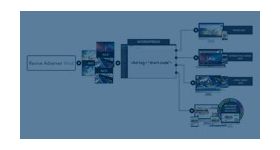
Click House Integration Plugin replaces the default MySQL backend with the ultra-fast, columnar. Designed for scalability and performance, this plugin transforms how you store and query large volumes of ad delivery and impression data. Click House database delivering a significant performance upgrade, especially for large-scale ad operations.
Upgrade your Revive Adserver reporting capabilities with high-performance, scalable analytics powered by ClickHouse.
Revive Adserver traditionally relies on MySQL for data storage and reporting. Our Click House Integration Plugin replaces the default MySQL backend with the ultra-fast, columnar. Designed for scalability and performance, this plugin transforms how you store and query large volumes of ad delivery and impression data. Click House database delivering a significant performance upgrade, especially for large-scale ad operations.
This plugin is designed for ad networks and publishers who need scalable, high-performance analytics without the latency and limitations of traditional databases.
Key Features:
Seamless Integration: Fully compatible with existing Revive Adserver setup – no disruption to your current ad delivery operations.
Scalable Architecture: Handles millions of ad impressions per day without compromising on speed or performance.
High-Speed Data Ingestion: Automatically streams Revive Adserver logs and statistics to ClickHouse with optimized schema mapping.
Stable & Secure: Designed with robust error handling, batching, and secure connection options.
Faster Report Generation: Enjoy lightning-fast queries even with billions of impressions, clicks, and conversions.
Benefits:
High-volume ad networks seeking performance improvements.
Teams needing enhanced analytics with minimal infrastructure cost.
Offloads heavy reporting tasks from the Revive MySQL database, ensuring better overall system performance.
Supports growing ad volumes and global traffic without degradation in performance.
Frequently Asked Questions
Why is ClickHouse faster than MySQL for ad server reporting?
+
MySQL is a row-oriented relational database designed for transactional workloads. ClickHouse is a column-oriented (columnar) database optimised for analytical queries that scan large datasets. For ad server reporting, which typically involves aggregating millions of impression, click, and conversion records, ClickHouse can execute queries 10x to 100x faster than MySQL at equivalent data volumes, reducing report load times from minutes to seconds.
Does this plugin replace MySQL entirely, or does it work alongside it?
+
The plugin replaces MySQL as the reporting data store for Revive Adserver's statistics and analytics layer. Revive's operational database (campaigns, banners, zones, advertisers) continues to run on MySQL. Only the delivery logs and reporting data are migrated to ClickHouse, ensuring no disruption to your ad server's operational functions.
What scale of ad operations benefits most from this plugin?
+
The plugin delivers the greatest performance benefit for publishers and ad networks processing more than 10 million impressions per day. At this scale, MySQL-based reporting becomes slow and resource-intensive, often causing report timeouts. ClickHouse handles billion-row datasets with sub-second query response times, making it suitable for enterprise-scale ad operations.
Does this plugin affect Revive Adserver's real-time ad delivery performance?
+
No. The plugin only affects the reporting layer. Real-time ad delivery decisions continue to run through Revive Adserver's delivery engine independently. ClickHouse receives delivery log data asynchronously, ensuring that reporting infrastructure does not impact ad serving latency.
What Revive Adserver reporting features are preserved after switching to ClickHouse?
+
All of Revive Adserver's standard reporting features, including impression counts, click counts, CTR, eCPM, campaign-level and zone-level breakdowns, and date-range filtering, are fully preserved. The plugin replicates the same report outputs as the MySQL backend, with significantly improved query performance at scale.